Podcasting
Podcasting: Marketing’s Quiet Frontier in 2017
Podcasting occupies an unusual position in 2017: large enough to matter and small enough that most businesses are ignoring it. Edison Research’s Infinite Dial study puts monthly podcast listening at 24% of Americans, with 15% listening weekly and 40% having ever listened. Those are not mass media numbers. They are, however, numbers attached to the most attentive audience in any medium.
Share of Americans age 12+
Source: Edison Research and Triton Digital, The Infinite Dial 2017.
Why audio earns attention nothing else does
The medium has a structural advantage that is easy to overlook. Podcasts are consumed during activities that occupy the hands and eyes but not the mind: commuting, exercising, cooking, cleaning. There is no competing feed, because scrolling is not possible while driving. A listener who starts a forty minute episode frequently finishes it, which is an engagement figure no other channel can approach.
The second advantage is the parasocial relationship. Listening to someone’s voice weekly for months produces a sense of knowing them that reading their writing does not. This is why host-read advertisements outperform produced spots by a wide margin: the endorsement carries the accumulated trust of that relationship. It is also why they are the only kind worth buying.
A display ad interrupts someone doing something else. A podcast ad is read by someone whose voice they chose to invite into their commute.
Four ways in, in order of cost
| Approach | Cost and effort | Honest assessment |
|---|---|---|
| Guesting on relevant shows | Free beyond your time. Requires a genuine point of view. | The highest return option for most small businesses and the most consistently overlooked. Start here. |
| Sponsoring a niche show | Modest. Small shows often sell direct at reasonable rates. | Works when the audience genuinely overlaps. Insist on host-read placement and a unique promo code. |
| Hosting your own show | High and ongoing. Realistically a year before it matters. | Only worth it if you can sustain it indefinitely. Most branded podcasts stop after eight episodes. |
| Repurposing episodes | Low, once audio exists. | One interview becomes a blog post, clips, and email content. This is what makes the economics work. |
Start small and stay consistent
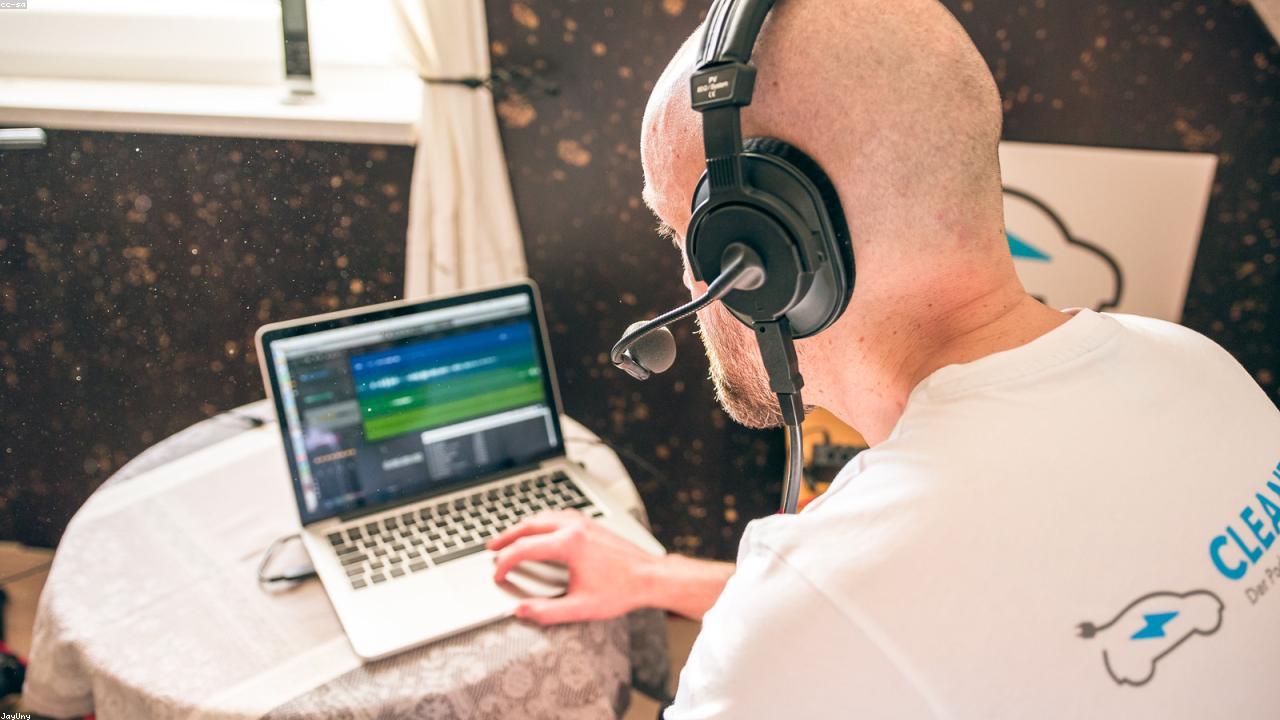
You do not need a studio. A quiet room with soft furnishings, a decent USB microphone, and a clear point of view will get you further than expensive equipment in a room with hard walls. Audio quality is dominated by the room and microphone placement, not by price. Get the microphone close to the speaker and record somewhere with carpet and curtains.
The harder discipline is respecting the listener’s time. An episode that could have been fifteen minutes and runs fifty teaches people to stop finishing your show, and completion is the entire advantage of the medium.
Measurement is genuinely weak, so plan for it
Be clear-eyed about this before spending money. Podcast analytics are poor by the standards of digital advertising: downloads count a file transfer rather than a human, and there is no click to track because the listener is driving. Anyone promising precise attribution is overselling.
- Use a distinct promo code or a vanity URL per show, never a shared one, since that is your only clean attribution.
- Add "how did you hear about us" to your enquiry form, which catches the listeners who never used the code.
- Judge sponsorships over months rather than weeks. Audio works through repetition, and a single insertion rarely does anything.
- Treat downloads as a reach estimate and nothing more.
Key takeaways
- ✓In 2017, 24% of Americans listened monthly and 15% weekly, per Edison Research.
- ✓Podcasts occupy hands and eyes but not the mind, which is why completion rates beat every other medium.
- ✓Host-read ads work because they borrow the host relationship. Produced spots largely do not.
- ✓Guesting is the highest-return, lowest-cost entry point and is routinely overlooked.
- ✓Attribution is genuinely weak. Use unique promo codes and judge over months, not weeks.
Related reading
Sources
- The Infinite Dial (annual US audio and podcast study), Edison Research and Triton Digital (2017)
- Audio and Podcasting Fact Sheet, Pew Research Center

Nadia Hoffmann
Social Media & Content Lead
Nadia Hoffmann leads social media and content at ThisCom, helping brands build audiences and community across social platforms, podcasts, and crowdfunding campaigns.
All articles by Nadia Hoffmann →Frequently asked questions
Do podcasts work for small businesses with limited budgets?+
Yes, but usually not by starting your own show. Guesting on relevant podcasts costs nothing but time and gets you in front of an established audience immediately. Sponsoring a niche show is often affordable because smaller shows sell directly. Hosting your own is the most expensive option and should be the last one you consider.
How do you measure podcast marketing results?+
Imperfectly, and you should plan around that. Use a unique promo code or vanity URL for each show, since there is no click to track when someone is driving. Add "how did you hear about us" to your enquiry form to catch listeners who never used the code. Downloads measure file transfers, not people, so treat them as a rough reach estimate only.
Why do most branded podcasts fail?+
They stop too early. Audiences build over many months, and the common pattern is a show that launches with enthusiasm, publishes six to eight episodes, then quietly ends before reaching the point where the investment returns anything. If you cannot commit to a couple of years of consistent publishing, sponsoring or guesting on an existing show is the better use of the same budget.
What equipment do I need to start a podcast?+
A decent USB microphone and a quiet room with soft furnishings. Sound quality is determined mostly by the room and how close the microphone is to the speaker, not by how much the equipment cost. A good microphone in a room with hard walls sounds worse than a modest one in a carpeted room with curtains.
Related articles
Long-Form Guides: Why Depth Wins Attention
Short posts are easy to ignore. Thorough, well organized guides earn links, rankings, and trust. Here is how to build them.
Read →Video MarketingEducational Video: Teaching Your Way to Trust
How-to and explainer videos turn a brand into a helpful expert. Here is why educational video is the most underrated content of 2014.
Read →SEOWhat Panda and Hummingbird Mean for SEO
Google’s Panda and Hummingbird updates reward quality and meaning over keyword tricks. Here is how to adapt your SEO.
Read →Related reading
- Email Marketing
Email Marketing for Small Business: The Complete 2026 Guide
The famous $36-per-$1 return is a self-reported survey figure, not a promise. Here is how a small business actually builds an email program that reaches the inbox and drives revenue, from list to automation to metrics.
- Email Marketing
How to Build an Email List From Scratch (Without Buying One)
A permission-based email list is your most valuable marketing asset. Here are the lead magnets, opt-in forms, and tactics that grow it ethically and fast.
- Email Automation
Welcome Email Sequences That Convert New Subscribers
The welcome sequence is the highest-engagement email you will ever send. Here is a proven structure to turn new subscribers into customers automatically.
- Email Automation
Email Automation 101: Workflows Every Small Business Should Set Up
Automated email flows run 24/7 and drive a large share of email revenue. Here are the core workflows every small business should set up first.
- Email Automation
Abandoned Cart Emails: Recover Lost Revenue on Autopilot
Most online carts are abandoned before checkout. A well-built abandoned-cart flow recovers a meaningful share of that revenue automatically.